After watching this week’s Wimba session I was relieved to find out that I’m not the only one going crazy. There were a lot of questions asked that helped me really hone in on different aspects of the AR project that I was still a little unsure of. What sparked my attention, in terms of presented information, was the explanation of the publishing project.
As an English teacher, I understand how the audience of a piece of work navigates it toward its purpose. Understanding who will be reading an essay changes what you will write and how you will write it. Teaching audience in writing was almost my AR project, but I couldn’t really connect it with technology in a way that worked for me.
I spend a lot of time during the year giving my students lessons in which they have to write something in different ways – for different audiences. When I give essays, I tell them who their audience is, rather than have them just write to me – the teacher. Since I changed my approach to essay writing, I have noticed the quality of the work has improved. Much like my AR report showed, when students are given the chance to collaborate and be more social within their educational system, they produce better products. They feel as if their work holds more value and they try harder.
Understanding audience also helps to define what should be in the essay. Students always claim that they don’t know how to start brainstorming or don’t know what to write. When they know exactly whom they are writing to, they can begin to cater their thinking toward that audience. This helps eliminate anxiety and allows the writer to write with more purpose.

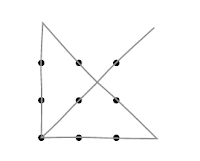
 After struggling for some time, most give up - thinking it can't be done. "The frames our minds create define - and confine - what we perceived to be possible," (Zander & Zander, 2002, pg 14). How we look at things is a big indicator as to how successful we will be in dealing with them. Once confidence is established, as experience increases, success will also increase. Again, it takes practice in whatever is being done. Chapter one was all about understanding the situation well enough to think beyond it. It is only when we are comfortable that we can really create. Perhaps that's why high school students rarely amaze their teachers. They are being forced to perform in settings where they are not comfortable. Below shows how thinking beyond the situation solves the puzzle.
 References: